
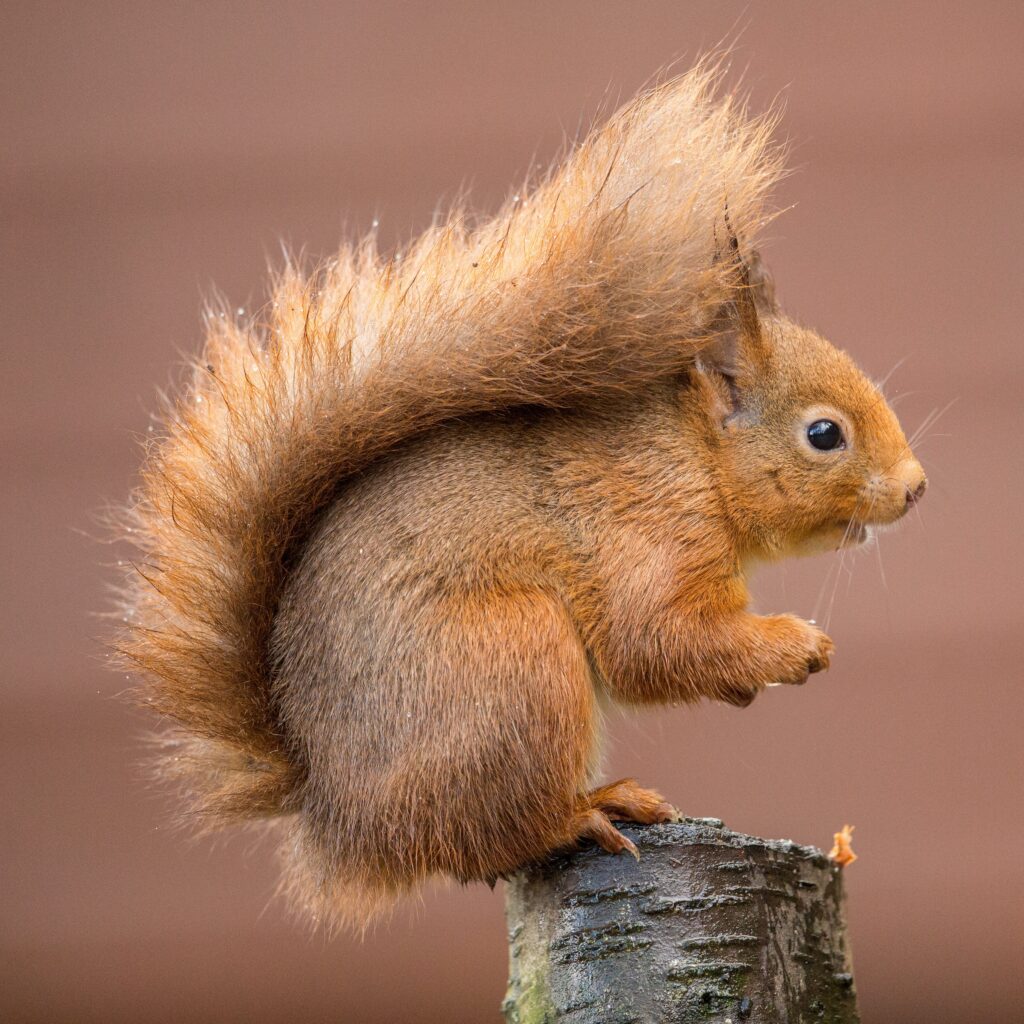
A QUARTER OF A MILLION SQUIRREL RECORDS IN SCOTLAND
Saving Scotland’s Red Squirrels (SSRS) has collected over 250,000 records of squirrels since the project began, just in time to celebrate Red Squirrel Appreciation Day
The data will be uploaded to the National Biodiversity Network Atlas, the UK’s largest repository of publicly available biodiversity data, and combines both native red squirrels and invasive non-native greys. This impressive milestone is a combination of sightings submitted by passionate members of the public and dedication from SSRS staff and volunteers carrying out rigorous monitoring across the country. The data is used by the project, and it is available to anyone, meaning other conservation organisations, research groups or budding naturalists can benefit from this impressive resource.
Saving Scotland’s Red Squirrels is a partnership project led by the Scottish Wildlife Trust, working in priority areas across Scotland for red squirrel conservation. The project uses public sightings and data from its own monitoring methods to track populations of both red and grey squirrels, making sure its conservation efforts are having the greatest impact to protect the native red squirrel.
Tom Lewis, SSRS Data Support Officer at the Scottish Wildlife Trust, said: “We combine citizen science and dedicated monitoring efforts to maintain a clear picture of where red and greys squirrels are distributed and use this to target our conservation efforts where they are needed.”
Since the project was formed in 2009, SSRS staff, volunteers and partners have seen populations of red squirrels recover and move back into areas that had previously been taken over by greys. At the start of the project, there were almost no red squirrels left in Aberdeen, having been replaced by the non-native greys. However, moving forward 16 years, only two grey squirrels were caught in 2025 and red squirrels are once again being regularly recorded in gardens and parks across the city.
Red Squirrel Appreciation Day is celebrated annually on 21 January as an opportunity to raise awareness of red squirrels and their conservation, and is an opportunity to celebrate their important role in Scotland’s natural heritage. Once widespread across the UK, this iconic species is now mainly found in Scotland, with around 220,000 individuals here, making up 80% of the UK population.
The number one threat to red squirrels in the UK and in Scotland is grey squirrels. This larger species was introduced from North America in the 19th Century and outcompetes reds for food and habitat. Some grey squirrels also carry the deadly squirrelpox virus. Studies show that grey squirrels can completely replace reds within 15 years, and this can happen up to 20 times faster if squirrelpox is present. SSRS staff, partners and volunteers are working to remove grey squirrels, creating safe areas where red populations can recover.
Tom continued: “SSRS is an essential part of keeping red squirrels as part of our landscape in Scotland, and we wouldn’t be able to do this without the nationwide community and the wealth of data they help collect. Public sightings from all over Scotland shape where we work, help us monitor our success and maximise our impact. Everyone who contributes a sighting is helping us to keep red squirrel thriving in Scotland.”
Members of the public can submit their sightings of both red and grey squirrels to scottishsquirrels.org.uk
Saving Scotland’s Red Squirrels is a partnership project led by the Scottish Wildlife Trust and supported by the Scottish Government’s Nature Restoration Fund, managed by NatureScot.