
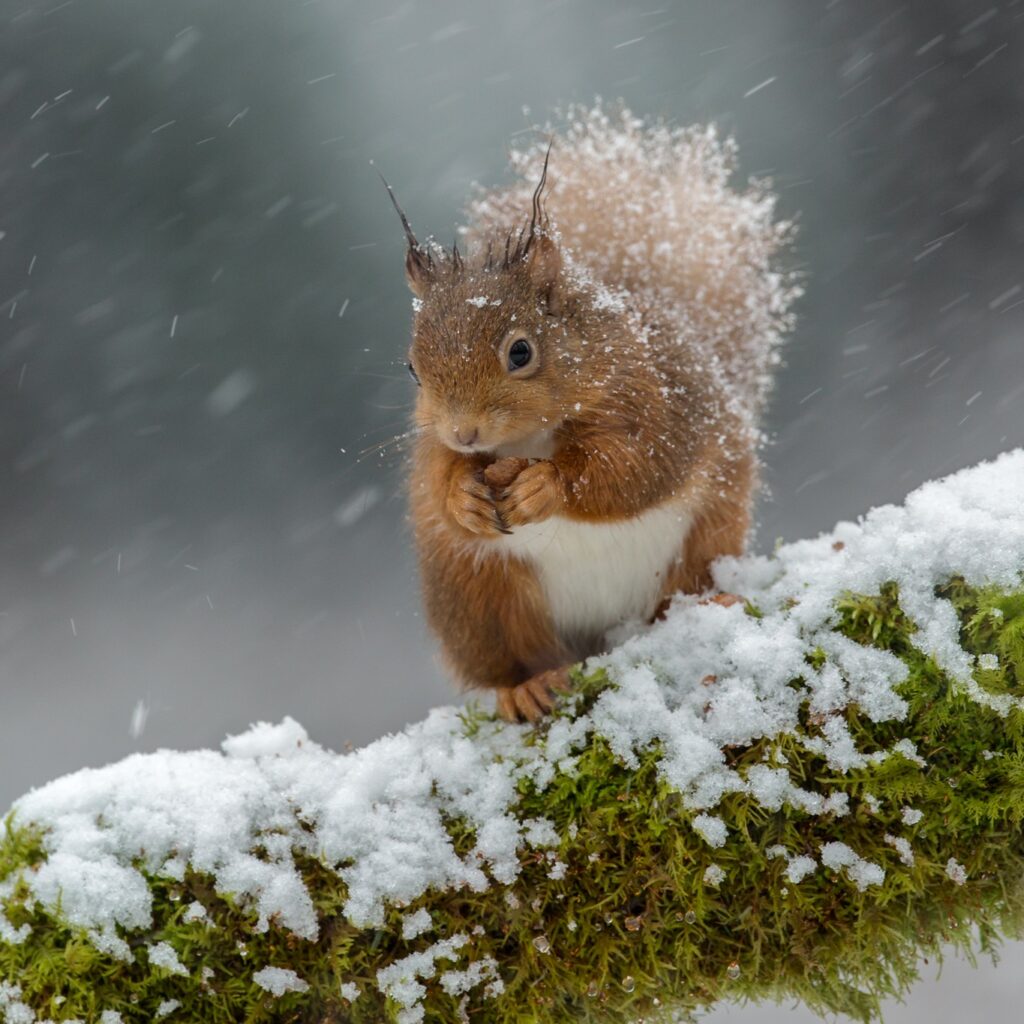
Success for red squirrel conservation along the Highland Line
Native red squirrels are expanding across central Scotland thanks to the efforts of a pioneering nature conservation project.
Saving Scotland’s Red Squirrels (SSRS) is a partnership project, led by the Scottish Wildlife Trust, working in key areas across the country where populations of red and grey squirrels meet.
The Highland Line control zone is a priority area for SSRS, following the Highland Boundary Fault, a geological feature which acts as a natural barrier to invasive non-native grey squirrels, limiting numbers traveling into the red squirrel stronghold of the Highlands and Grampians. This Highland Line zone covers significant parts of the Argyll and Bute, Stirling, Perth and Kinross, Angus and Aberdeenshire council areas. SSRS also works closely with the Loch Lomond and the Trossachs National Park Authority in this area.
SSRS project partners, a dedicated network of volunteers and individual landowners are doing their bit to defend the Highland Line, preventing any incursions of grey squirrels to the north and expanding red squirrel territory to the south. Monitoring and humane lethal control to remove grey squirrels create safe habitats for red populations to recover.
Grey squirrels outcompete red squirrels for food and habitat, and can replace an entire population of red squirrels within 15 years, unless the grey population is reduced. Some grey squirrels also carry the squirrelpox virus, which doesn’t affect them but is deadly to reds if transmitted. Fortunately, there has never been a case of squirrelpox recorded along the Highland Line, and there has only been one positive case north of the Central Belt, in Dunfermline in 2024. Keeping the number of grey squirrels down in this area means an outbreak is less likely to occur.
Hard work and passion are paying off, and red squirrels are returning to areas where they had previously been completely replaced by grey squirrels. Red squirrels are also being reported in higher numbers in some areas, and fewer grey squirrels are being seen in areas where conservation work has been carried out.
Strathmore
- At Strathmore Estates at Glamis, dedication from SSRS staff and the estate has led to a significant decline in grey squirrel numbers. In 2022, red squirrels were a very rare sight on the grounds. This year, red squirrels are now the most commonly seen squirrel species.
- After three years of working at a large holiday home garden, near Meigle, project staff are pleased to report that no grey squirrels were caught in the 2025 season. Numbers of greys have been declining since work started in 2023, and the area now has an abundant population of reds, which has recovered as the greys have been removed.
- In Coupar Angus, a resident has reported seeing a red squirrel in their garden for the first time, saying “We have lived here for twenty years and this is the first red squirrel we have had in our garden”. This is down to the work of an SSRS volunteer who has been using live-traps to catch grey squirrels in the area for a number of years, and now sees red squirrels on a daily basis.
The Mearns
- Working with the National Trust for Scotland at their House of Dun Estate, SSRS detected one grey squirrel in July, through a hair sample left at a monitoring feeder box. Since then, no further grey squirrels have been detected this year.
- Near Montrose Basin, at Sunnyside Estate and the surrounding area, no grey squirrels have been detected since March 2025, when live-trapping was carried out and a small number of greys were caught.
- Across all of East Angus, breeding populations of grey squirrels have been reduced down to just two locations, where control is being carried out. With grey squirrel populations significantly reduced in this area, SSRS’s primary activity is now monitoring to confirm presence or absence of grey squirrels.
Argyll and the Trossachs
- SSRS has been working closely with the Cameron House team, including at the resort’s golf course, The Carrick, located on the western shore of Loch Lomond. In 2025, sightings of red squirrels across the Cameron House Resort grounds have increased significantly. This positive trend follows sustained grey squirrel control carried out by the resort in previous years, alongside an intensive removal programme led by SSRS last year. As a result, grey squirrels recorded this year have mostly been isolated individuals passing through the area, and these have been removed promptly.
- Red squirrels have been seen on the southern tip of the Rosneath Peninsula, having been suspected to be absent from this area for over 12 years. Independent grey squirrel control is being carried out here, and red squirrels returning is testament to the hard work of the residents.
Jen Payne, SSRS Conservation Lead for the Highland Line, said: “It is really encouraging to see red squirrel populations recover and persist along the Highland Line. We know how important this area is for preventing the spread of grey squirrels further north, so our work to defend the line and hopefully expand red squirrel territory further south is vital to protect the red squirrels of the Highlands and the North East. We’re grateful to have so many passionate volunteers, partners and landowners helping us to look after this iconic species. No matter how often you see red squirrels, it’s always a joy to watch them in the wild, so seeing them flourish in new areas, or return to people’s gardens after long absences is heartwarming.”
Saving Scotland’s Red Squirrels is supported by the Scottish Government’s Nature Restoration Fund, managed by NatureScot.
Members of the public can get involved and support the project by reporting squirrel sightings – both red and grey – to the SSRS website.