
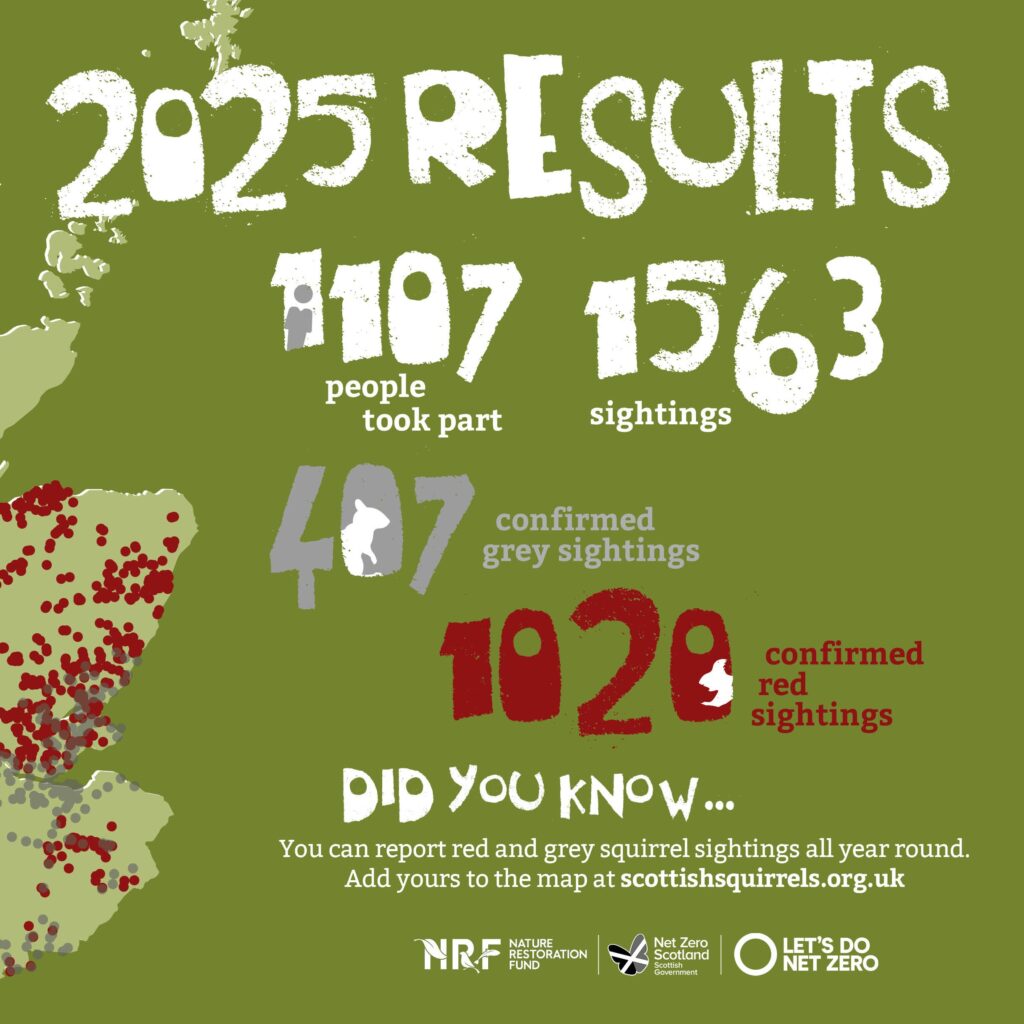
Saving Scotland’s Red Squirrels (SSRS) is pleased to announce the results of this year’s Great Scottish Squirrel Survey:
-
1,107 people took part
-
1,563 squirrels were recorded
-
407 confirmed grey squirrel sightings
-
1,020 confirmed red squirrel sightings
The partnership project encouraged people all across Scotland to keep an eye out for both red and grey squirrels between the 6 – 12 October, for its seventh annual survey.
Coinciding with Red Squirrel Appreciation Week and supported by survey partner, Trees for Life, the survey aims to provide a snapshot of squirrel populations up and down the country.
Gail Turney, Programme Manager for Saving Scotland’s Red Squirrels, said: “It’s fantastic to see so many people get involved with the UK’s largest squirrel survey. Storm Amy certainly set the week off to a wild start, but we were delighted to see so many people taking part as the survey went on. With over 1,100 participants, it’s clear the people of Scotland love red squirrels and find joy in seeing this iconic species on walks, in gardens and (with any luck!) spotting them at our guided events.”
SSRS uses public sightings data year-round to shape its monitoring and control work, all with the aim of protecting red squirrels and expanding their habitat.
Grey squirrels are the number one threat to red squirrels in Scotland, as they replace red squirrels through competition for food and habitat. Grey squirrels can also carry the squirrelpox virus, which is deadly if transmitted to red squirrels.
SSRS focuses its efforts where it can have the most impact for red squirrels, designating three priority areas in Scotland where populations of red and grey squirrels meet.
Along the Highland Line, which runs from Helensburgh to Stonehaven, there is a huge amount of public support for red squirrels. This is a key area for preventing grey squirrels moving further north into the red squirrel-stronghold in the Highlands and Grampians. The area covers several council areas, including Perth and Kinross which recorded the highest number of squirrels during the week (219). SSRS works closely with the Loch Lomond and the Trossachs National Park Authority here to carry out practical work as well as engaging residents and visitors to the National Park with red squirrel conservation, including by hosting an information stall and talks during the survey.
North of the Highland Line, Aberdeen City and the surrounding shire has seen red squirrels returning to urban gardens and parks since SSRS started work in 2009, after the native squirrels had been lost from much of the area. Survey events held with SSRS partner, Aberdeen City Council, celebrated red squirrels and demonstrated practical woodland management to protect their favoured habitats.
In South Scotland, SSRS staff work alongside 16 passionate and dedicated Local Volunteer Network Groups to protect pockets of red squirrels. Grey squirrels are continuously spreading into this area from England and the Central Belt, so raising awareness of red squirrel conservation, and particularly the signs of squirrelpox and what to do if there is an outbreak, is vital. Staff and volunteers regularly engage with the public to encourage reporting squirrel sightings, especially during the Great Scottish Squirrel Survey.
Gail continued– “As well as providing us with really useful data, the Great Scottish Squirrel Survey also demonstrates how many people are passionate about red squirrels and are willing to do their bit to make sure there is always a home for them here in Scotland. Don’t forget, you can submit your squirrel sightings all year round, we love to hear about them!”
Steve Micklewright, Chief Executive at Trees for Life, said: “It’s great to see so many people enjoying nature and actively helping our red squirrels by reporting their sightings. The Great Scottish Squirrel Survey is a fantastic annual event that allows everyone to get involved and make a real difference for wildlife. Sightings from the Highlands, particularly in the north and west, provide vital data and insight into the new and expanding red squirrel populations. Thank you to everyone contributing to the protection and restoration of these iconic animals.”
Add your squirrel sightings to the SSRS map at scottishsquirrels.org.uk.
Saving Scotland’s Red Squirrels is a partnership project led by the Scottish Wildlife Trust and supported by the Scottish Government’s Nature Restoration Fund, managed by NatureScot.